




The Founder Who Built a New Model of Tax and Funding Access and the Ambassador Who Carries That Mission Into Communities, Institutions, and Second-Chance America
Opportunity means little if the people who need it cannot reach it.
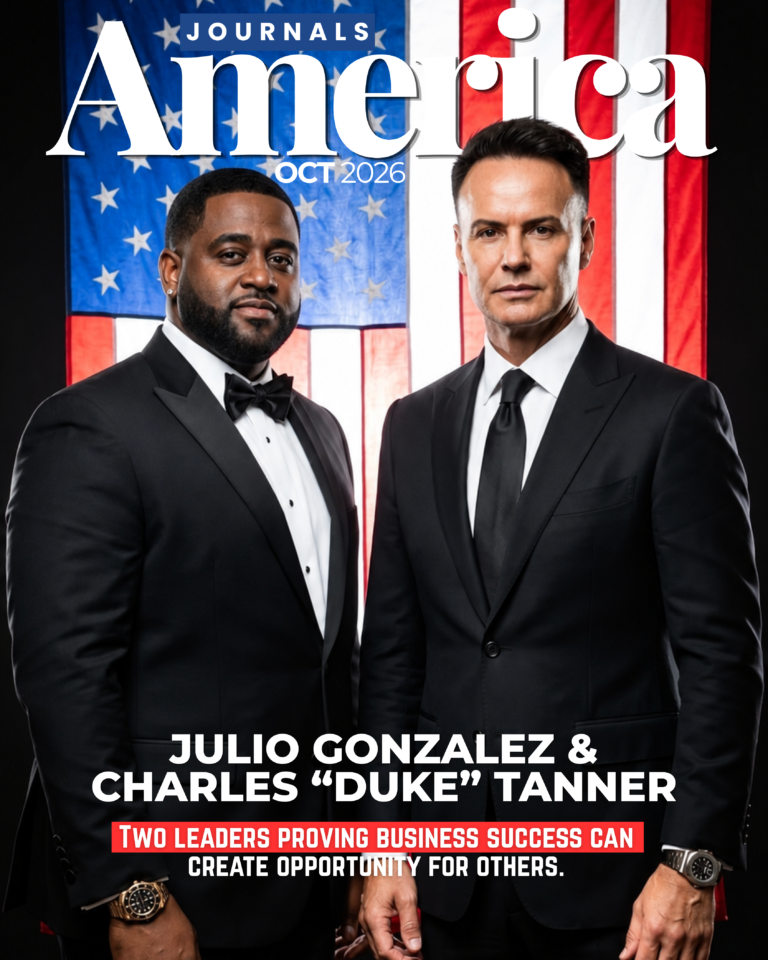
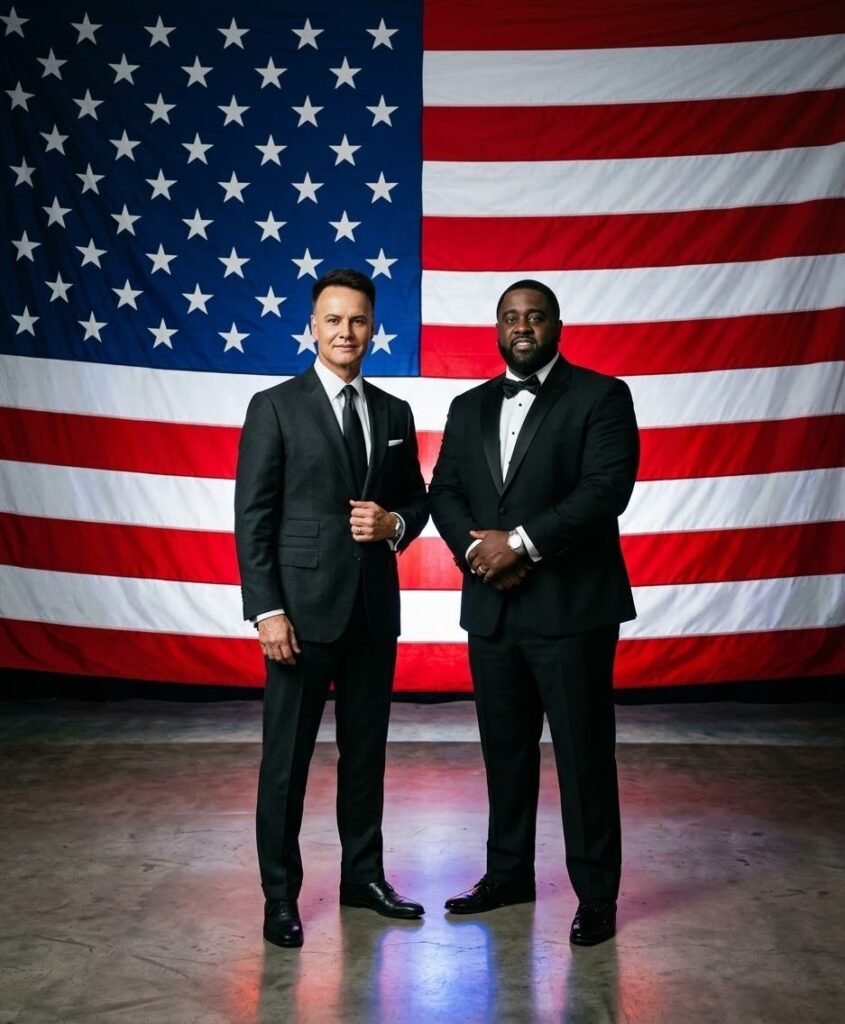
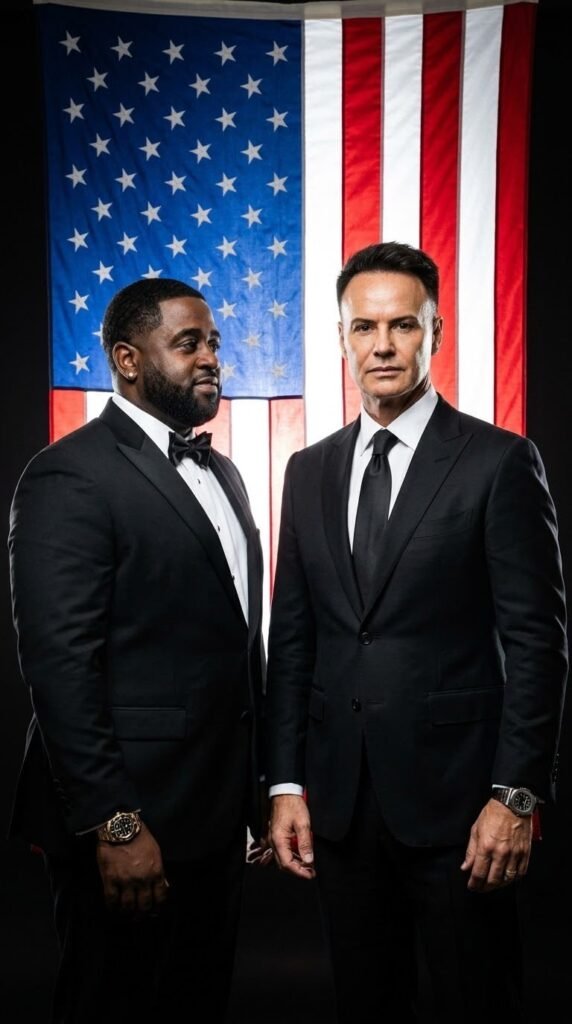
That idea sits at the center of the partnership between Julio Gonzalez and Charles “Duke” Tanner, two leaders whose histories could hardly be more different, yet whose work at Engineered Tax Services (ETS) is united by the same conviction: access should not belong only to those who already know where to look.
Gonzalez built the institution.
Tanner carries its mission into communities and conversations that conventional financial and tax organizations often struggle to reach.
One understands the code, the structure, and the financial mechanisms.
The other understands the people, relationships, and lived realities on the other side of the door.
Together, they represent a model in which specialized financial knowledge and community-level trust become tools for expanding opportunity.
JULIO GONZALEZ: BUILDING THE INFRASTRUCTURE OF ACCESS
As Founder, Chief Executive Officer, and Chairman of Engineered Tax Services, Julio Gonzalez has spent decades developing a business around a structural problem he identified early in his career.
Large corporations and wealthy families could afford specialized teams dedicated to identifying tax credits, incentives, grants, and government opportunities.
Smaller businesses, nonprofits, churches, veterans, and community organizations often had a CPA and a mission—but no comparable infrastructure behind them.
Gonzalez founded ETS in 2001 to help change that equation.
Headquartered in West Palm Beach, Florida, the company was designed to work alongside accounting firms rather than replace them, bringing engineers, tax attorneys, scientists, and specialized expertise into client relationships that might otherwise never have access to those resources.
His philosophy was simple but consequential:
Specialized opportunity should not be reserved exclusively for the largest players.
BEYOND TAXES: A BROADER DEFINITION OF CAPITAL
Under Gonzalez’s leadership, ETS has developed a broad specialty practice encompassing cost segregation, energy incentives, research and development credits, estates, trusts, legal structures, grants, government contracts, and government funding.
But Gonzalez’s philosophy has expanded beyond the traditional definition of tax strategy.
A tax incentive can preserve capital.
A grant can launch a program.
A government contract can sustain employment.
A financial structure can allow an owner to keep more resources inside a growing business.
In that sense, access to opportunity becomes another form of capital.
Gonzalez has framed this broader mission around the ideas of tax equality and grant equality—not as a promise of guaranteed outcomes, but as a commitment to helping qualified businesses and organizations enter processes that may otherwise feel inaccessible.
The principle is important: eligibility is never automatic, and strategy must be supported by expertise and documentation.
ENGINEERING A BETTER WORLD
The same philosophy extends beyond commercial transactions.
Through ETS Cares and Engineered Impact, Gonzalez has connected the company’s relationships, expertise, and platform with causes involving veterans, animal rescue, second-chance initiatives, nonprofits, underserved communities, and students, including work with Roosevelt Elementary in West Palm Beach.
The underlying belief is that business success should create capacity for service.
Profit and purpose do not have to operate in separate worlds.
For Gonzalez, the measure of a successful enterprise increasingly includes the people and communities who benefit from its existence.
That philosophy also appears in Engineered Jet Tax, where specialized tax structuring is applied to private aviation ownership, depreciation, charter activity, and professional management.
The consistent principle is analysis before action.
Understand the asset.
Understand the structure.
Understand the rules.
Then determine whether the opportunity is genuinely supportable.
WHEN SUCCESS BECOMES SERVICE
On October 2, 2026, Gonzalez received the Luminary Award for Humanitarian Impact at the Luminous Advocacy Project’s 5th Annual Light Up the Night Gala at the Four Seasons Hotel Miami, according to the supplied profile.
He dedicated the recognition to his mother, Paula Gonzalez, whom he lost to breast cancer when he was young.
Her belief in him before he had achieved professional success became part of the foundation of his philosophy.
The lesson he carries from that experience is larger than personal achievement: pain can become purpose, and success can become service.
For Gonzalez, helping another family create more time together represents one of the most meaningful ways to transform personal success into something larger.
THE OWNERSHIP MINDSET
At the Hispanic Heritage Investor Summit 2026, Gonzalez extended that message to Latino investors and business owners through a broader argument about ownership.
His message was straightforward: stop renting the future and start owning it.
Businesses, real estate, and other assets can create opportunities for families to build and transfer wealth, while ownership can also open access to financial tools that may not be available to those who remain outside the asset-owning economy.
The philosophy reflects the larger mission behind his career.
The objective is not simply to reduce a tax bill.
It is to help people understand the systems around them well enough to make better decisions within those systems.
CHARLES “DUKE” TANNER: THE HUMAN BRIDGE
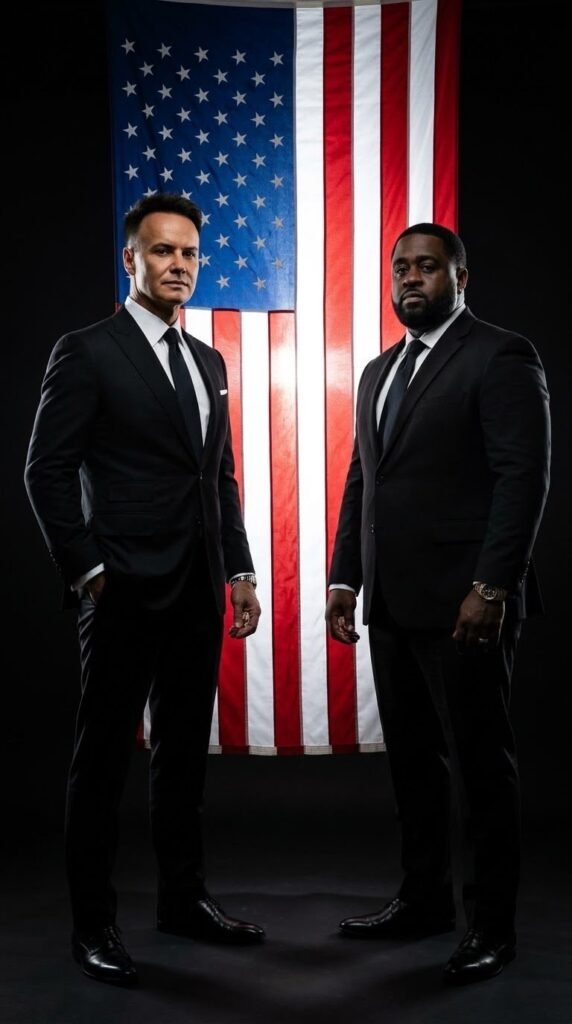
If Gonzalez built the infrastructure, Charles “Duke” Tanner represents the human bridge between that infrastructure and communities that may never have approached a conventional financial institution.
As Vice President of Community Affairs & Outreach and National Ambassador for Engineered Tax Services, Tanner brings grants, incentives, contracting pathways, relationships, and opportunity into churches, neighborhoods, city halls, businesses, and community environments.
His own life gives that role a particular depth.
Tanner does not speak about second chances as an abstract concept.
He has lived one.
FROM THE BOXING RING TO A SECOND CHANCE
Tanner began boxing at six years old in Gary, Indiana.
The sport taught him discipline, focus, resilience, and the ability to recover after a setback.
He turned professional at 18, pursuing a better future for his family. His professional record reached 19–0, he trained under Angelo Dundee, and he competed on ESPN.
Then his life changed dramatically.
A first-offense, nonviolent drug conspiracy resulted in two life sentences in federal prison.
His son was only two years old when Tanner was taken away.
He would spend nearly two decades incarcerated, including 16 years, six months, and 21 days in maximum security, according to the supplied profile.
Faith, family, and the belief that his life still had a purpose became central to his ability to endure those years.
COMING HOME WITH A PURPOSE
Tanner returned home in 2020 after receiving clemency from President Trump.
But release did not immediately mean complete freedom.
Ten years of federal supervision followed, placing additional restrictions on travel and family life.
The experience reinforced a lesson that now sits at the center of his advocacy: returning home is only the beginning of reentry.
A person needs more than release paperwork.
They need housing.
Employment.
Healthcare.
Transportation.
Mentorship.
Financial education.
Family support.
And, perhaps most importantly, people willing to open a door.
A full presidential pardon followed on May 28, 2025, according to the supplied profile.
Tanner returned to a son who was then 19.
The years could not be recovered.
But they could become the foundation for something meaningful.
DUKE GOT LIFE: KEEPING THE YEARS ON THE RECORD
Tanner documented his journey in Duke Got Life: A Boxer’s Fight for Freedom and One Last Shot at Redemption.
The book preserves the story beyond the headlines—the promise, mistakes, punishment, faith, family, and consequences surrounding a sentence that affected far more than one individual.
His philosophy of freedom is equally direct:
Freedom without purpose is another prison.
For Tanner, returning home was never supposed to be the conclusion.
It was supposed to be the beginning of responsibility.
That responsibility now extends into fatherhood, community work, second chances, and advocacy.
FATHERHOOD AT THE CENTER
Tanner’s understanding of reentry is deeply connected to fatherhood.
Incarceration can remove a father from a home without removing the emotional and financial consequences from the family.
His work therefore focuses on the practical realities that determine whether a second chance becomes sustainable.
He speaks openly to men returning from incarceration about asking for help, avoiding environments that threaten their freedom, communicating honestly with family, and understanding that rebuilding does not happen overnight.
You do not have to repair sixteen years in a single day.
You have to make the next decision move toward stability.
That philosophy has become a central element of his public work.
ADVOCACY BEYOND THE BUSINESS
Tanner has also taken his second-chance philosophy into public policy.
In late September 2026, he brought his advocacy to Capitol Hill around the Safer Supervision Act of 2025 (S. 3077 / H.R. 5883), arguing for a federal supervision system that supports successful reentry rather than creating unnecessary obstacles for people already demonstrating stability.
His broader work includes relationships with the Jack Brewer Foundation, REFORM Alliance, and the Aleph Institute, as well as involvement with Legacy Impact Technologies and the Legacy Impact Foundation.
A 12-week prison-based fatherhood program, Round by Round, was developed from Duke Got Life with the Jack Brewer Foundation.
The work reflects a consistent belief: second chances become meaningful when they are accompanied by practical pathways forward.
WHERE BUSINESS MEETS SECOND CHANCES
At Engineered Tax Services, Tanner’s role extends beyond representation.
He develops relationships.
Identifies opportunities.
Connects decision-makers.
Helps qualify potential clients.
And remains involved beyond the introduction.
His lived experience also gives ETS a perspective that conventional tax organizations may not possess.
For Tanner, a community is not simply a market.
It is a network of people, institutions, families, businesses, churches, and organizations whose needs may not fit neatly inside traditional financial systems.
His mission is to help bring those communities into the conversation.
TWO HISTORIES. ONE STANDARD.
The partnership between Gonzalez and Tanner works because their differences become complementary.
Gonzalez supplies the structure.
Tanner supplies the trust.
Gonzalez understands the tax code, funding mechanisms, incentives, and specialized financial architecture.
Tanner understands how to carry those opportunities into rooms where traditional institutions may not have credibility or access.
One can open the funding file.
The other can help open the door.
One builds systems.
The other builds bridges.
And both share the belief that business can be profitable while still serving people.
MEASURING THE AFTERMATH
For Gonzalez and Tanner, the announcement is not the outcome.
The real test comes afterward.
Who entered the process?
Who received the grant?
Who secured the contract?
Who accessed the incentive?
Who found employment?
Who reunited with family?
Who discovered an opportunity they previously did not know existed?
Who avoided returning to prison?
These are the questions that transform a corporate mission into a human one.
Because opportunity is not meaningful merely because it exists.
It becomes meaningful when someone can actually reach it.
ENGINEERING OPPORTUNITY
Julio Gonzalez and Charles “Duke” Tanner represent two very different paths to the same conclusion.
Gonzalez built Engineered Tax Services around the belief that specialized financial opportunity should not be restricted to those with the largest resources.
Tanner’s life demonstrates what can happen when someone receives a genuine second chance—and then chooses to turn that chance into service.
Their partnership brings those philosophies together.
Tax strategy.
Funding.
Community engagement.
Second chances.
Fatherhood.
Entrepreneurship.
Ownership.
Service.
The work is ultimately about access.
Because if opportunity only works for the people who already know how to find it, the system remains unfinished.
Gonzalez built the structure.
Tanner carries it into the world.
Together, they are attempting to finish the work—not simply by talking about opportunity, but by engineering pathways toward it.
Adam Smith is an accomplished individual who serves as an chief contributor at Healthify Magazine, a leading publication dedicated to promoting health and wellness. With a passion for empowering individuals to live healthier lives, Adam brings a wealth of knowledge and expertise to his role.