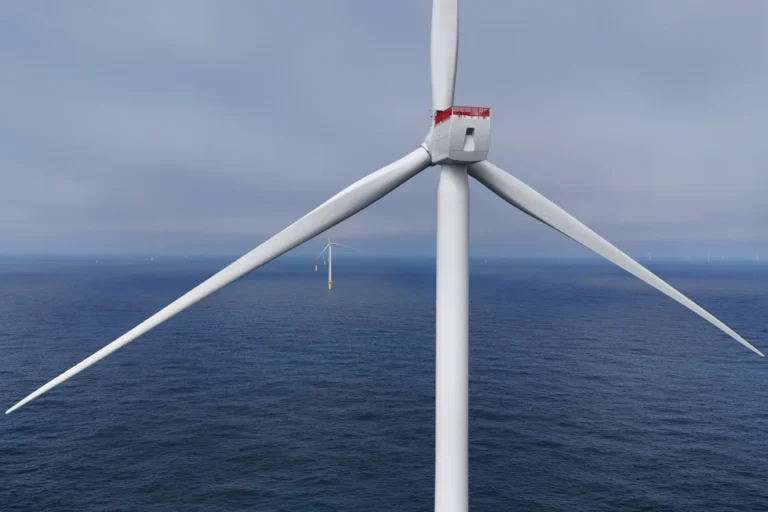
In a significant shift in U.S. energy policy, the Trump administration has reached a $1.22 billion agreement with RWE U.S. Offshore, enabling the company to relinquish its offshore wind leases off the coasts of New York, California, and Louisiana. The agreement marks another major step in the administration’s effort to reduce offshore wind development while encouraging investment in traditional energy sources.
RWE stated that despite years of planning, regulatory collaboration, and financial investment, it no longer saw a realistic path toward obtaining permits for its offshore wind projects. Under the agreement, the company will receive compensation for surrendering the leases and has announced plans to redirect its investment strategy.
The company will invest $900 million in a liquefied natural gas (LNG) project in Louisiana and allocate an additional $300 million toward natural gas turbine development. RWE also confirmed it is advancing 15 natural gas peaking power projects across the United States as part of its evolving energy portfolio.
The latest agreement increases the total value of offshore wind lease buyback deals under the Trump administration to approximately $3.9 billion. Previous agreements included nearly $1 billion with TotalEnergies, approximately $900 million for Golden State Wind and Bluepoint Wind, and $765 million for Invenergy, all tied to companies agreeing to exit offshore wind projects while investing in fossil fuel infrastructure.
Interior Secretary Doug Burgum described the policy as a move toward an energy system based on “common sense,” emphasizing dependable power generation, energy security, and affordability. The administration argues that expanding natural gas infrastructure provides reliable baseload electricity capable of meeting growing national demand.
Critics, however, contend that the strategy undermines clean energy development and increases long-term costs. Senator Sheldon Whitehouse argued that compensating companies to abandon renewable energy projects effectively shifts billions of dollars toward fossil fuel expansion, potentially resulting in higher electricity costs for consumers while slowing progress toward lower-carbon energy sources.
The policy has also prompted legal challenges from several states that support offshore wind development. California has announced plans to challenge the federal government’s actions in court, highlighting the growing divide between state renewable energy goals and federal energy policy.
The agreement reflects a broader transformation in U.S. energy strategy, as the administration continues prioritizing fossil fuel investment over renewable energy expansion. Whether this approach strengthens long-term energy security or delays the nation’s transition toward cleaner electricity remains a central question shaping America’s energy future.